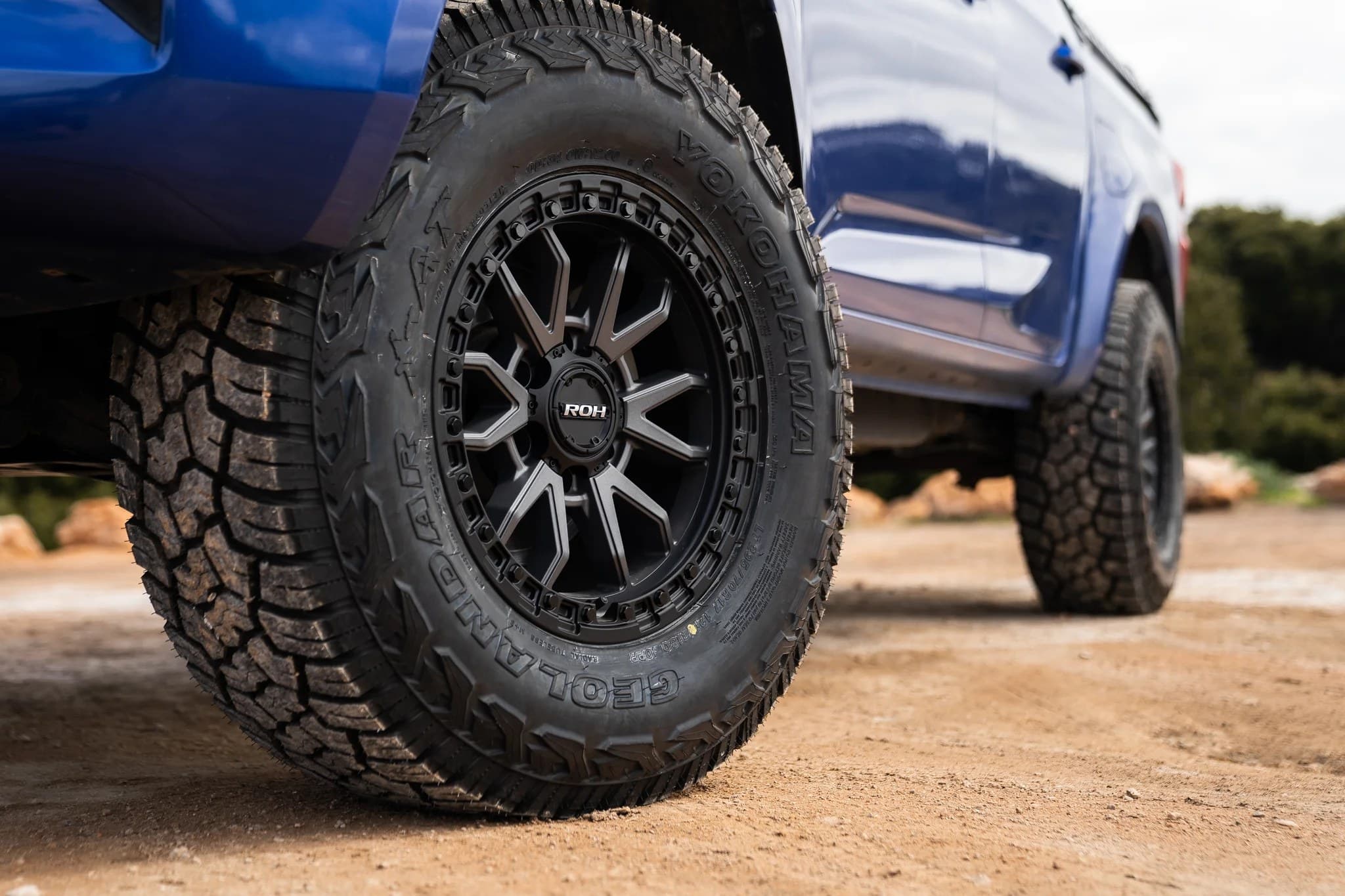
Understanding Wheel Sizing
How wheel size codes work - diameter, width, offset, bolt pattern, and centre bore. Use our interactive guide below.
How to Find Your Wheel Size
The full spec is usually stamped on the back of the wheel, near the valve stem or spokes - look for a code like 18x9 +20 6x139.7. Your vehicle's tyre placard (driver's door jamb or owner's manual) also lists the factory wheel size.
Important: Bolt pattern must match your vehicle's hub exactly. Centre bore just needs to be equal to or larger than your hub bore - a hub-centric ring adapts a larger bore down. Diameter, width, and offset have some flexibility depending on your fitment goals.
Want wheels and tyres matched to your exact vehicle?
This page just explains the numbers. Our Combo Finder looks up your vehicle and shows you wheels and tyres guaranteed to fit.
18x9 +20 6x139.7 CB106.2
Diameter
The wheel's diameter in inches, measured across the bead seats where the tyre mounts. This must match your tyre's rim size exactly.
Wheel Size Reference Guide+
Bolt Pattern & Centre Bore
Two measurements that must match exactly:
- Bolt Pattern (PCD): bolt count and circle diameter - e.g. 6x139.7 for most 4WD utes and wagons.
- Centre Bore: must be equal to or larger than your hub bore. A larger bore needs a hub-centric ring to sit true.
When to Replace Your Wheels
Consider replacing your wheels when:
- The rim is visibly bent, cracked, or has a chunk missing
- Corrosion or pitting is deep enough that it won't seal a tyre bead
- You feel a vibration at speed that isn't fixed by balancing
- The wheel won't hold tyre pressure even after a new tyre is fitted
- Repeated repairs on the same spot on a structural area
Common Wheel Types & Finishes
A note on compliance+
Changing your tyre or wheel size, or fitting a suspension lift, can affect your vehicle's compliance with the Australian Design Rules (ADR) and your state or territory's vehicle modification requirements. Some changes are fine as-is; larger changes may need engineering certification before the vehicle can be legally registered or insured. Rules vary by state, so it's your responsibility to check with your local registration authority (or a licensed vehicle certifier) before modifying your vehicle. Give us a call if you'd like help understanding what a particular size or lift means for your specific vehicle.